Variable Speed Drives (VSD) for Centrifugal Pumps - Complete Technical Reference
Comprehensive VSD/VFD guide for centrifugal pumps: affinity laws, energy savings calculations, minimum speed limits, harmonics, motor considerations, and API 610/IEEE 519 requirements.
API 610IEC 61800IEEE 519NEMA MG1
Quick Reference
| Parameter | Typical Value | Standard |
|---|
| Energy Savings | 20-50% (up to 70%) | - |
| Payback Period | 6-18 months | - |
| VFD Cost (Installed) | $8,000-$15,000 | - |
| Min Speed (Motor Cooling) | 30-40% | NEMA MG1 |
| Min Speed (Bearing) | 15-25% | API 610 |
| THD Limit (Current) | ≤5% | IEEE 519 |
| Motor Insulation Class | F or H | NEMA MG1 |
| Preferred Operating Region | 70-120% BEP | HI |
Affinity Laws
The affinity laws are the foundation for understanding VSD energy savings. They describe how centrifugal pump performance changes with speed or impeller diameter.
The Three Fundamental Laws
| Parameter | Speed Change | Diameter Change | Formula |
|---|
| Flow (Q) | Linear | Linear | Q₂/Q₁ = N₂/N₁ = D₂/D₁ |
| Head (H) | Squared | Squared | H₂/H₁ = (N₂/N₁)² = (D₂/D₁)² |
| Power (P) | Cubed | Cubed | P₂/P₁ = (N₂/N₁)³ = (D₂/D₁)³ |
Speed Reduction vs Power Consumption
Speed    Flow    Head    Power   Power Saved
━━━━━━━━━━━━━━━━━━━━━━━━━━━━━━━━━━━━━━━━━━━
100%     100%    100%    100%    0%
 95%      95%     90%     86%    14%
 90%      90%     81%     73%    27%
 85%      85%     72%     61%    39%
 80%      80%     64%     51%    49%  ◄── 20% speed cut = 49% power savings
 75%      75%     56%     42%    58%
 70%      70%     49%     34%    66%
 60%      60%     36%     22%    78%
 50%      50%     25%     13%    87%
Worked Example: Speed Reduction
Given:
- Original: 2,950 rpm, 500 m³/h, 85 m head, 150 kW
- Required: 400 m³/h
Calculate:
Speed ratio = Q₂/Q₁ = 400/500 = 0.80

New speed = 2,950 × 0.80 = 2,360 rpm
New head = 85 × (0.80)² = 54.4 m
New power = 150 × (0.80)³ = 76.8 kW

Power savings = 150 - 76.8 = 73.2 kW (48.8% reduction)
Affinity Laws Accuracy
Speed Change      Accuracy          Notes
━━━━━━━━━━━━━━━━━━━━━━━━━━━━━━━━━━━━━━━━━━━━━━━━━
< 10%             Excellent         ±2%
10-25%            Good              ±5%
25-40%            Moderate          ±10%, verify efficiency
> 40%             Less reliable     Consult manufacturer
Important: Affinity laws are most accurate for speed changes under 25%. Beyond that, efficiency shifts can affect predictions.
Energy Savings Calculation
VSD vs Throttle Valve Control
| Control Method | How It Works | Energy Efficiency | Typical Use |
|---|
| VSD | Reduces motor speed | 80-95% | Variable flow |
| Throttle Valve | Adds resistance | 50-70% | Small adjustments |
| Bypass Control | Returns flow to suction | 30-50% | Emergency only |
| On/Off Control | Cycles pump | Variable | Level control |
Energy Cost Calculation
Formula:
Annual Energy Cost = P × η_motor × Hours × Rate

Where:
P = Shaft power (kW)
η_motor = Motor efficiency (typically 0.90-0.95)
Hours = Operating hours per year
Rate = Electricity cost ($/kWh)
Comparison Example:
| Parameter | Throttle Valve | VSD Control |
|---|
| Design point | 75 kW, 100% flow | 75 kW, 100% flow |
| Average operation | 70% flow | 70% flow |
| Power at 70% flow | ~65 kW | 25.7 kW |
| Operating hours | 8,000 hrs/year | 8,000 hrs/year |
| Electricity rate | $0.10/kWh | $0.10/kWh |
| Annual energy cost | $52,000 | $20,560 |
| Annual savings | — | $31,440 |
Static Head Impact on Savings
Friction Head Ratio = Friction Head / Total Head

┌─────────────────────────────────────────────────────────┐
│ Friction Ratio │ VSD Effectiveness │ Expected Savings   │
├─────────────────────────────────────────────────────────┤
│    > 80%       │    Excellent      │    50-70%          │
│   60-80%       │    Good           │    35-50%          │
│   40-60%       │    Moderate       │    20-35%          │
│   20-40%       │    Limited        │    10-20%          │
│    < 20%       │    Poor           │    < 10%           │
└─────────────────────────────────────────────────────────┘
Rule: If static head exceeds 60% of total head, VSD savings will be significantly limited.
Minimum Speed Limits
Running pumps below minimum speed can cause damage. Understanding these limits is critical for VSD applications.
Minimum Speed Requirements
| Concern | Minimum Speed | Cause of Problem |
|---|
| Motor Cooling | 30-40% | TEFC fan ineffective at low speed |
| Bearing Lubrication | 15-25% | Oil ring pickup inadequate |
| Seal Face Cooling | 20-50% | Insufficient flush flow |
| Hydraulic Stability | Pump-specific | Recirculation and suction issues |
| Suction Recirculation | 40-60% BEP flow | Internal recirculation begins |
Motor Cooling Solutions
| Motor Type | Min Speed | Solution |
|---|
| TEFC (Standard) | 30-40% | Limited VSD range |
| TEFC + Separate Fan | 10-15% | Add external cooling fan |
| TEAO (Air Over) | Per airflow | Requires external air supply |
| Inverter-Duty | 10-20% | Designed for VSD use |
| Water-Cooled | 5-10% | Independent cooling circuit |
Preferred Operating Region (HI Standard)
Per Hydraulic Institute:
                    Preferred          Allowable
                    Operating Region   Operating Region
                    ◄───────────────►  ◄──────────────────────────────►
BEP Flow: ────────────────●────────────────────────────────────────────
                          │
                   70%    100%   120%           Shutoff        Max Flow
                          BEP
| Region | Flow Range | Pump Condition |
|---|
| Preferred (POR) | 70-120% BEP | Optimal reliability, long life |
| Allowable (AOR) | Manufacturer-defined | Acceptable with caution |
| Outside AOR | Beyond limits | Damage likely, avoid |
Recirculation at Reduced Speed
Reducing speed moves the operating point, potentially causing:
| Issue | Symptom | Threshold |
|---|
| Suction Recirculation | Noise, vibration | Below 40-60% BEP flow |
| Discharge Recirculation | Seal damage, heating | Below 50-70% BEP flow |
| Internal Heating | Temperature rise | Below 10-20% BEP flow |
Rule: Never operate continuously below manufacturer’s minimum speed or minimum flow rating.
Electrical Considerations
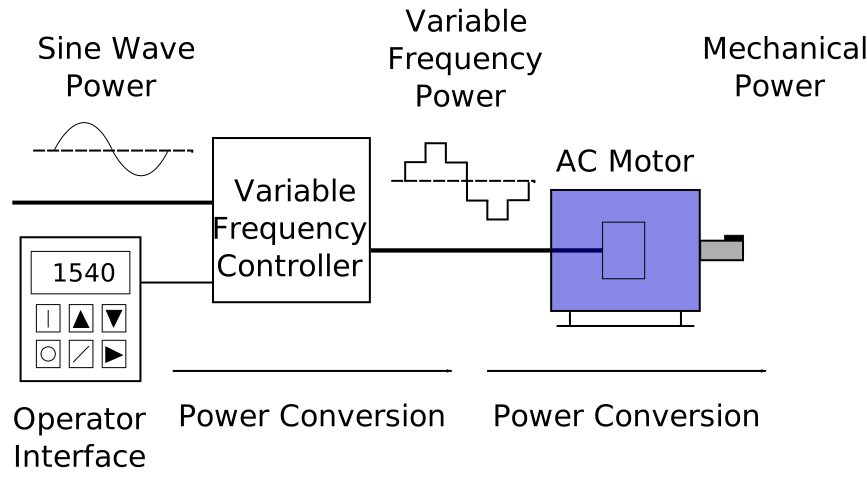
VFD system block diagram showing main components: Rectifier (AC to DC), DC Bus (filtering and energy storage), and Inverter (DC to variable frequency AC) for motor speed control (Image credit: Psemdel - Wikimedia Commons, CC BY-SA 4.0)
IEEE 519 Harmonic Limits
VFDs generate harmonics that can affect power quality. IEEE 519 sets limits:
| ISC/IL Ratio | TDD Limit | Individual Harmonic |
|---|
| < 20 | 5.0% | 4.0% |
| 20-50 | 8.0% | 7.0% |
| 50-100 | 12.0% | 10.0% |
| 100-1000 | 15.0% | 12.0% |
| > 1000 | 20.0% | 15.0% |
Where:
- ISC = Short-circuit current at PCC
- IL = Load current
- TDD = Total Demand Distortion
Harmonic Mitigation Options
| Method | THD Reduction | Cost | Application |
|---|
| Line Reactor (3%) | 25-35% | $ | Basic protection |
| Line Reactor (5%) | 35-45% | $ | Standard |
| DC Link Choke | 30-40% | $$ | Medium loads |
| 12-Pulse Drive | 70-80% | $$$ | Large loads |
| 18-Pulse Drive | 90-95% | $$$$ | Critical applications |
| Active Filter | 95-99% | $$$$$ | Stringent requirements |
Motor Insulation Requirements
| VFD Voltage | Motor Insulation | Rise Time Concern |
|---|
| ≤ 480V | Class F minimum | Standard PWM OK |
| 480V + Long cable | Class H recommended | Use output filter |
| 600V+ | Inverter-duty only | dV/dt filter required |
Cable Length Limits
| Carrier Frequency | Max Cable Length | Without Filter |
|---|
| 2 kHz | 300 m (1000 ft) | 150 m (500 ft) |
| 4 kHz | 150 m (500 ft) | 75 m (250 ft) |
| 8 kHz | 75 m (250 ft) | 30 m (100 ft) |
| 16 kHz | 30 m (100 ft) | 15 m (50 ft) |
Note: Long cables cause voltage reflection at motor terminals, potentially exceeding insulation ratings.
Bearing Current Protection
VFDs can induce shaft voltages that cause bearing damage (EDM - Electrical Discharge Machining):
| Protection Method | Effectiveness | Application |
|---|
| Shaft Grounding Ring | 90-95% | Standard |
| Insulated Bearings (DE) | 95%+ | Large motors |
| Insulated Bearings (Both Ends) | 99%+ | Critical applications |
| Ceramic Bearings | 99%+ | Highest protection |
| Common Mode Filter | 80-90% | Additional protection |
VFD Protective Features
Modern VFDs offer built-in protection specifically for pump applications:
Standard Protection Functions
| Feature | Function | Benefit |
|---|
| Underload Detection | Monitors power, detects dry run | Prevents dry running damage |
| Overload Protection | Current and thermal limits | Prevents motor burnout |
| Pump Clean Cycle | Periodic high-speed flush | Prevents clogging |
| Sleep Mode | Stops pump at low demand | Energy savings |
| Pipe Fill Mode | Slow ramp during startup | Prevents water hammer |
| Skip Frequencies | Avoids resonance points | Reduces vibration |
| Automatic Restart | Recovers from faults | Maintains operation |
Skip Frequency Programming
Skip frequencies avoid speeds that cause mechanical resonance:
Skip Frequency Configuration Example:
━━━━━━━━━━━━━━━━━━━━━━━━━━━━━━━━━━━━
Skip Band 1: 23.5 - 24.5 Hz (piping resonance)
Skip Band 2: 31.0 - 32.0 Hz (structural resonance)
Skip Band 3: 45.0 - 46.0 Hz (motor resonance)

VFD will automatically jump over these frequencies
during acceleration/deceleration
Soft Start Benefits
| Parameter | DOL Start | VFD Soft Start |
|---|
| Starting Current | 600-800% FLA | 100-150% FLA |
| Mechanical Shock | High | Minimal |
| Water Hammer Risk | High | Eliminated |
| Pipe Stress | High | Minimal |
| Coupling Wear | Accelerated | Reduced |
| Motor Life | Reduced | Extended |
Economic Analysis
Cost Comparison: VFD vs Impeller Trim
| Item | Impeller Trim | VFD |
|---|
| Equipment Cost | $500-$2,000 | $8,000-$15,000 |
| Installation | $500-$1,000 | $2,000-$5,000 |
| Total Initial | $1,000-$3,000 | $10,000-$20,000 |
| Flexibility | Fixed | Variable |
| Energy Savings | Fixed point only | Full range |
| Payback | N/A | 6-18 months |
When to Choose Each:
- Impeller Trim: Fixed flow reduction, tight budget, minimal future changes
- VFD: Variable demand, high runtime, process control needed, high energy cost
Life Cycle Cost Analysis
20-Year LCC Example: 75 kW Pump, Variable Flow Application
| Cost Element | Fixed Speed + Valve | VFD |
|---|
| Equipment & Installation | $50,000 | $65,000 |
| Energy (20 years) | $832,000 | $360,000 |
| Maintenance | $40,000 | $55,000 |
| Valve Replacement | $15,000 | $0 |
| Total LCC | $937,000 | $480,000 |
| Savings | — | $457,000 |
Payback Calculation
Simple Payback:
Payback (years) = VFD Investment / Annual Energy Savings
Example:
VFD Cost (installed): $15,000
Annual Energy Savings: $31,440

Payback = $15,000 / $31,440 = 0.48 years (5.7 months)
ROI by Application
| Application | Typical ROI | Payback Period |
|---|
| HVAC Chilled Water | 150-300% | 6-12 months |
| Cooling Tower | 200-400% | 4-8 months |
| Booster Pump | 100-200% | 12-24 months |
| Process Circulation | 150-250% | 8-16 months |
| Boiler Feedwater | 100-150% | 12-18 months |
When to Use VSD
Decision Matrix
| Factor | Use VSD | Don’t Use VSD |
|---|
| Flow Variation | > 30% turndown | < 15% turndown |
| Static Head | < 60% of total | > 80% of total |
| Operating Hours | > 4,000 hrs/year | < 2,000 hrs/year |
| Energy Cost | High priority | Low concern |
| Control Need | Precise required | On/off acceptable |
| Motor Size | > 15 kW | < 5 kW |
Ideal VSD Applications
| Application | Why VSD Works | Expected Savings |
|---|
| HVAC Chilled Water | Variable load, high friction | 50-70% |
| Cooling Tower | Variable ambient, high friction | 50-70% |
| Building Booster | Variable demand | 35-50% |
| Process Cooling | Production rate varies | 40-60% |
| Irrigation | Seasonal, time of day | 30-50% |
Poor VSD Applications
| Application | Why VSD Limited | Alternative |
|---|
| Deep Well | 90%+ static head | On/off + tank |
| Boiler Feed | Constant makeup | Valve trim |
| Fire Pump | Constant full speed | None |
| Transfer Pump | Short runtime | None |
| High Viscosity | PD pump better | Use PD pump |
Troubleshooting with VFD
VFDs provide diagnostic capability for pump problems:
Speed Ramping Diagnostics
| Symptom | Diagnostic Method | Likely Cause |
|---|
| Vibration at specific speed | Ramp slowly, note frequency | Resonance |
| Vibration increases with speed | Compare to H-Q curve | Cavitation or off-BEP |
| Vibration constant all speeds | Check at low speed | Mechanical (bearing, alignment) |
Cavitation Detection
Troubleshooting Procedure:
━━━━━━━━━━━━━━━━━━━━━━━━━━
1. Note symptoms (noise, vibration, pressure fluctuation)
2. Slowly reduce VFD speed
3. If symptoms improve → Cavitation likely
   - Check NPSHa vs NPSHr at reduced flow
   - Verify suction conditions
4. If symptoms persist → Other cause
   - Check mechanical condition
VFD Fault Codes
| Common Fault | Possible Cause | Action |
|---|
| Overcurrent | Overload, short circuit | Check pump, reduce load |
| Overvoltage | Regeneration, fast decel | Increase decel time |
| Motor Overload | Bound pump, high viscosity | Check pump, reduce speed |
| Ground Fault | Insulation failure | Check motor, cables |
| Overtemperature | Poor ventilation, overload | Check cabinet cooling |
Vendor Evaluation Checklist
VFD Specification
| Item | Requirement | Verified |
|---|
| Motor Rating | VFD ≥ motor FLA + 15% margin | ☐ |
| Voltage/Frequency | Matches supply | ☐ |
| Enclosure | IP55 min for indoor | ☐ |
| Harmonic Compliance | IEEE 519 met | ☐ |
| Input Filter | Line reactor included | ☐ |
| Output Filter | dV/dt if cable > 50m | ☐ |
| PID Control | Built-in | ☐ |
| Communication | Modbus/Profibus as required | ☐ |
Motor Specification
| Item | Requirement | Verified |
|---|
| Insulation | Class F minimum | ☐ |
| Duty Rating | Inverter-duty or VFD-ready | ☐ |
| Bearing Protection | Grounding ring specified | ☐ |
| Cooling | Separate fan if min speed < 30% | ☐ |
| Temperature Sensor | PT100/Thermistor included | ☐ |
Pump Verification
| Item | Requirement | Verified |
|---|
| Minimum Speed | Documented, matches application | ☐ |
| Speed Range | Covers expected operation | ☐ |
| Bearing Type | Suitable for VSD operation | ☐ |
| Seal Type | Verified for flow range | ☐ |
| Curves Provided | Multiple speeds shown | ☐ |
Summary
Key Points
- Affinity Laws: Power varies with speed cubed — 20% speed reduction = 49% power savings
- Best Applications: High friction head systems (>60% of total), variable flow, high runtime
- Minimum Speed: Typically 30-40% for motor cooling, verify for specific application
- Payback: Usually 6-18 months for suitable applications
- Harmonics: Comply with IEEE 519, use line reactors as standard
- Motor: Use inverter-duty or Class F+ insulation with shaft grounding
Quick Selection Guide
Is VSD Right for Your Application?
━━━━━━━━━━━━━━━━━━━━━━━━━━━━━━━━━━
START
  │
  ▼
┌─────────────────────────────────┐
│ Flow variation > 30%?          │──No──▶ VSD not recommended
└─────────────────────────────────┘
  │ Yes
  ▼
┌─────────────────────────────────┐
│ Static head < 60% of total?    │──No──▶ Limited savings
└─────────────────────────────────┘
  │ Yes
  ▼
┌─────────────────────────────────┐
│ Operating hours > 4,000/yr?    │──No──▶ Calculate payback
└─────────────────────────────────┘
  │ Yes
  ▼
VSD HIGHLY RECOMMENDED ✓
Related Topics:
Image Credits
References:
